
Valediction
an end-of-year letter to my students

Once May comes around, I am exhausted and have been counting the weeks to the end of the semester for weeks. Something I read recently said that the academic world has the right idea--that breaking time into semesters is the work rhythm best aligned to humans, at least among indoor work options. Semesters roughly track with seasons, though they peel away from our physiology by treating the start of fall semester the same as the start of spring semester. Spring semester is a pretty serious misnomer, given that most of it happens during the time when we would naturally sleep twelve hours a day and eat a lot of stew. Still, we come out of it eventually, and then, it’s May, and we are a few days away from never seeing each other again. At least not all of us together, and that seems impossible to imagine, given that we’ve met every week, almost, since September, to think and feel together.
One of you, in your reading annotations, wrote down a line of Robin Wall Kimmerer’s and jotted the annotation, “what does she mean by ‘time is circular’? I don’t get that.” With humility, I say, I don’t really either. Then, with hubris, I explain it anyway, for I am a professor, and an eldest child, and those are powerful prods toward making inappropriately definitive pronouncements. I don’t think it’s really a circle, but rather, it’s round. A spiral. When I return to our classroom in September, none of you will be there. And none of the new students will know me, and they won’t remember you, and they won’t sense your ghosts, though they will be sitting right inside them in your same chairs, as you were in the ghosts from the year before.
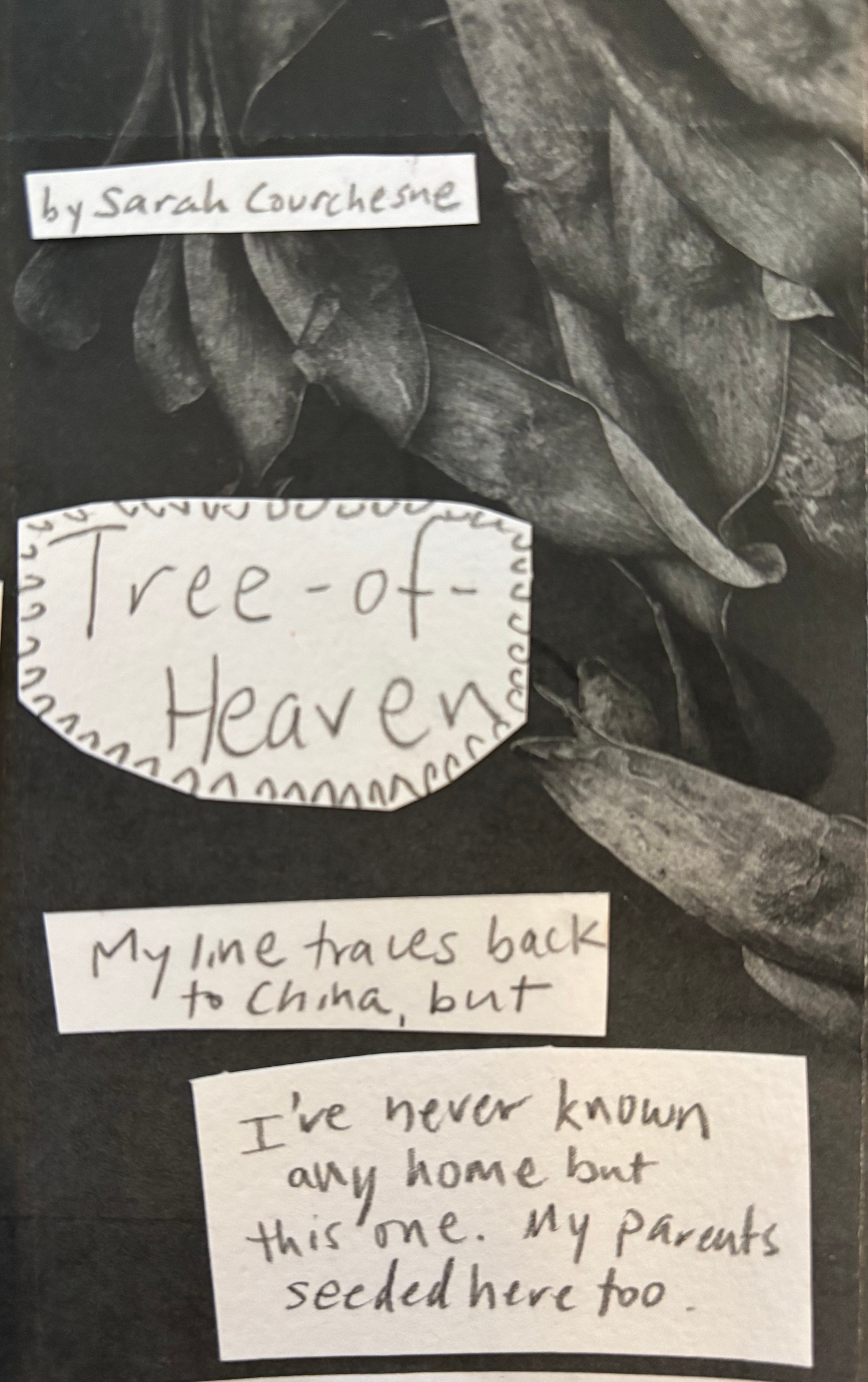
I wanted to say something to you all, but there is never a good time, on the last day of class. It’s always hectic, and then it just ends, unceremoniously, at 12:50pm. We will be outside all morning, working to bring the woods on campus into some better balance, not overrun by the bittersweet and garlic mustard that have canted the community into a state of invasional meltdown. Some of these troubled species come from across the world, and others are from here, but their worst instincts are encouraged by the neglected state of things. The Asian bittersweet snakes up the trees, and it goads the native fox grapes into laddering up, peer pressuring them, like impressionable teens, into also choking out the oaks and cedars. Sometimes, you would ask me if bittersweet is bad, or if tree-of-heaven is bad, or if DuPont executives, lawyers, and scientists are bad, or if foresters are bad. I tried to tell you how I don’t think any living thing is bad, though some have lost their way, and some are so desperately ashamed of themselves that they can barely look at you, and when someone is that ashamed, they will do anything to keep you from seeing them.
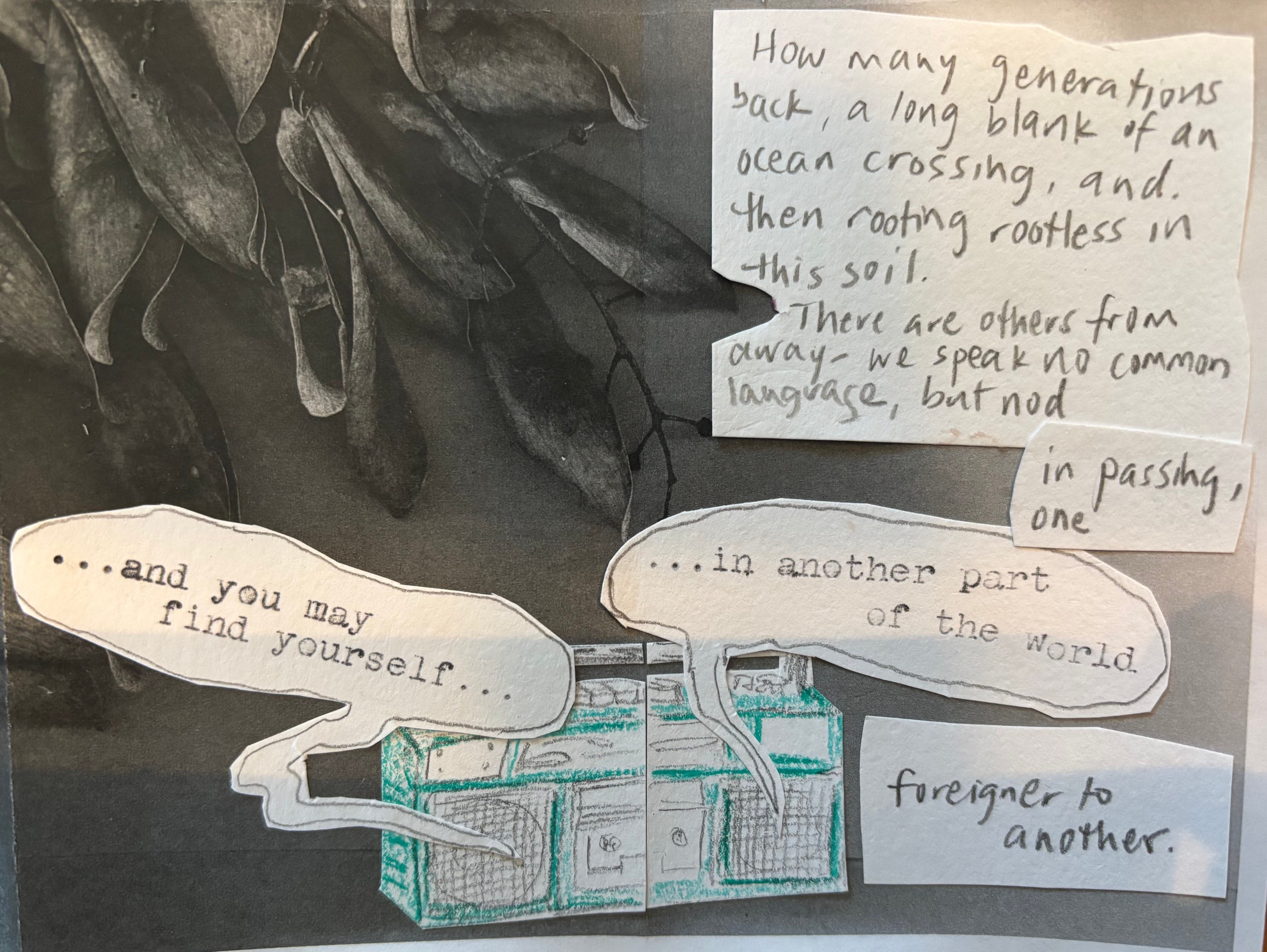
The powers that I hope you have now, that you are developing, after our time together, is to recognize certain patterns in the world, certain ways that people will dismiss or discredit you when you are really onto something. When you point to something that you know is wrong, and they do all their tricks, they call you every name they can -- say you’re a hysterical housewife, naive young woman, unhinged veteran, that your people are only getting sick because they have bad genes, that’s when you know you’re on the right track. Like that kids’ game “Hotter/Colder” -- the more they aggress, dismiss, or condescend, the closer you must be to the doorknob of the closet where everything is hidden.
You are studying environmental science, and they will try and make you think that science is “objective”-- that it has no room in it for emotions, or taking sides, or for considerations like justice or intuition. You know by now that this is not true. As Liboiron1 taught us, we cannot separate doing good science from being good in the world. Also, some things, like dumping plastics, or PFAS, into a river, or the human bloodstream, are just rude, and you don’t need low p-value statistical analysis to know that.
Remember that scientist on the webinar we watched about forest carbon sequestration? The one who sniffed and half smiled as she said, “A lot of non-scientists, they have a sort of romantic, poetic idea about forests. They hate to see even one tree ever get cut down.” Show compassion for her. She has cut off half of herself in order to feel a part of the manly club of forestry. She can no longer admit that it is sad to cut down a tree, no matter what, just like it’s sad to watch a person die, and if you can’t feel that anymore, then a connection has jiggled loose inside you, and you ought to see about fixing that up.
I’ve been reading a book2 all about the two hemispheres of the brain, and about how our culture, American and European culture, is exactly as you would expect if the left brain were to seize the controls and determine that it alone has all the answers. The left brain has a tendency toward fixed abstractions, toward absolutes, toward certainty, toward universalism and mechanistic explanations. Under healthy conditions, it respects and is balanced by the right hemisphere, which is flexible and open, humble, uncertain, at ease in metaphor and intuition. The right hemisphere deals in context and specificity, not generalizations. Liboiron tells us that careful generalization has its use, but that we must not think we can universalize our scientific findings across all contexts. You will notice how often the forces that tend to destroy life do it by decontextualizing. Science itself builds on a system where a person leaves their home to go away to college, then moves again to do a PhD, then roams from place to place doing post-doc after post-doc, and it makes no difference to the quality of their science. In fact, it’s considered better not to do your undergrad and graduate degrees at the same place. Science, after all, is entirely portable, universalizing. It’s “the view from nowhere” and thus can be done anywhere. This also means that no one can form any durable ties, and no one can get rooted into any particular soil. This is by design.
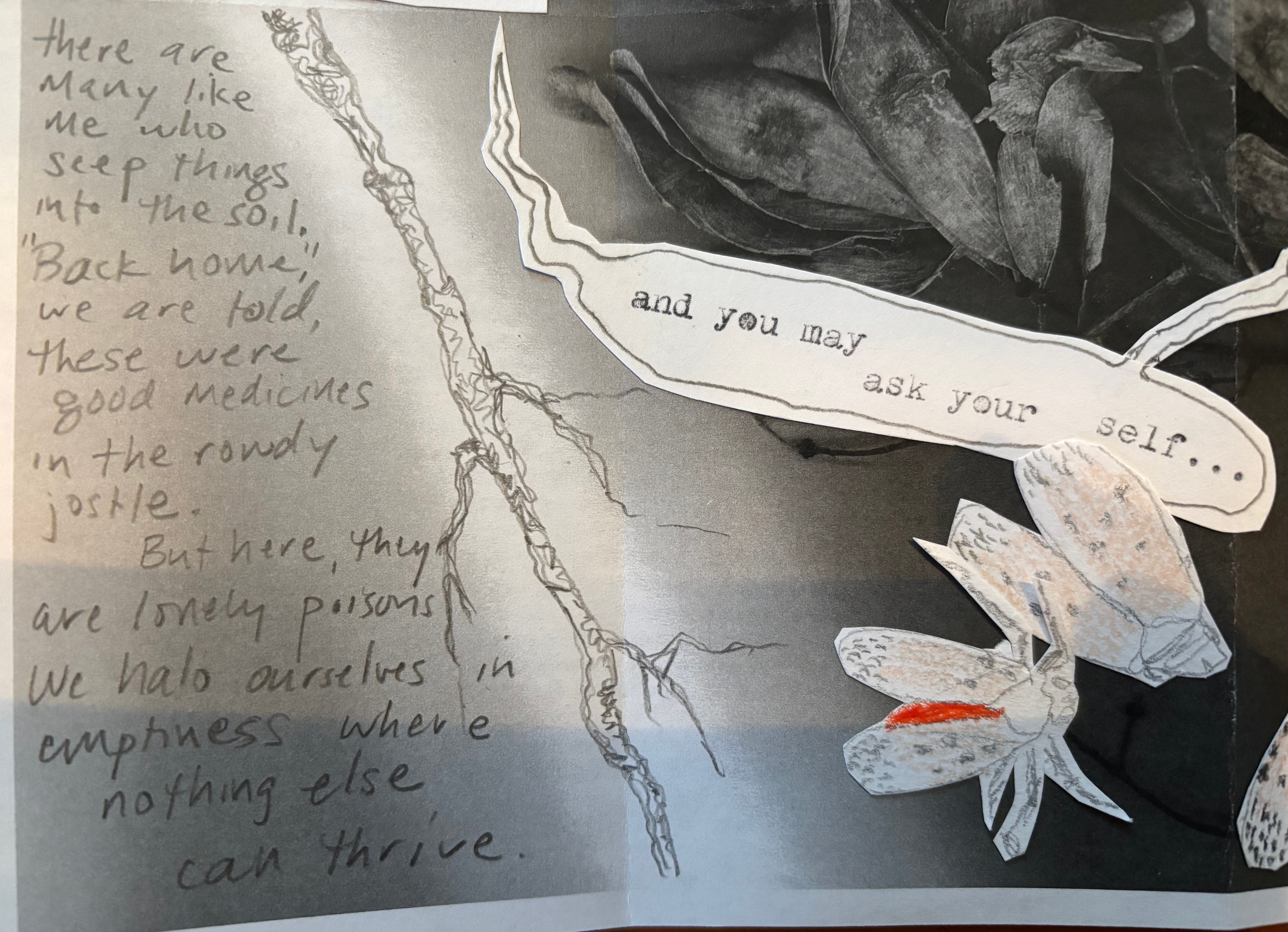
The forces set up against you will use the word “community” because they know we all crave that. You must notice how often, when they say “community” they actually mean “population” -- a group of individuals with some trait in common, or even just a consumer brand preference in common. They don’t want a real community to form, because it’s in communities that people notice something is amiss, that too many people on their street have cancer, or that there aren’t as many birds in the woods as there used to be. When they know each other and the land that well, that’s when they can band together and protest.
Remember, in the recordings of the DuPont depositions3 from West Virginia, when the lawyer asked one of the DuPont guys, “So you knew there was a risk of harm to the women working at the plant?”
“No,” the DuPont guy answers, sharply.
“No?” the lawyer says, puzzled.
“No. There was no risk to the women. There was a risk to the fetus.”
He really seemed to think this was a critical point of order, and a tidy clarification. That he was carving nature at the joints on this one. They want you atomized, shucked from your context so utterly that it begins before you are born.
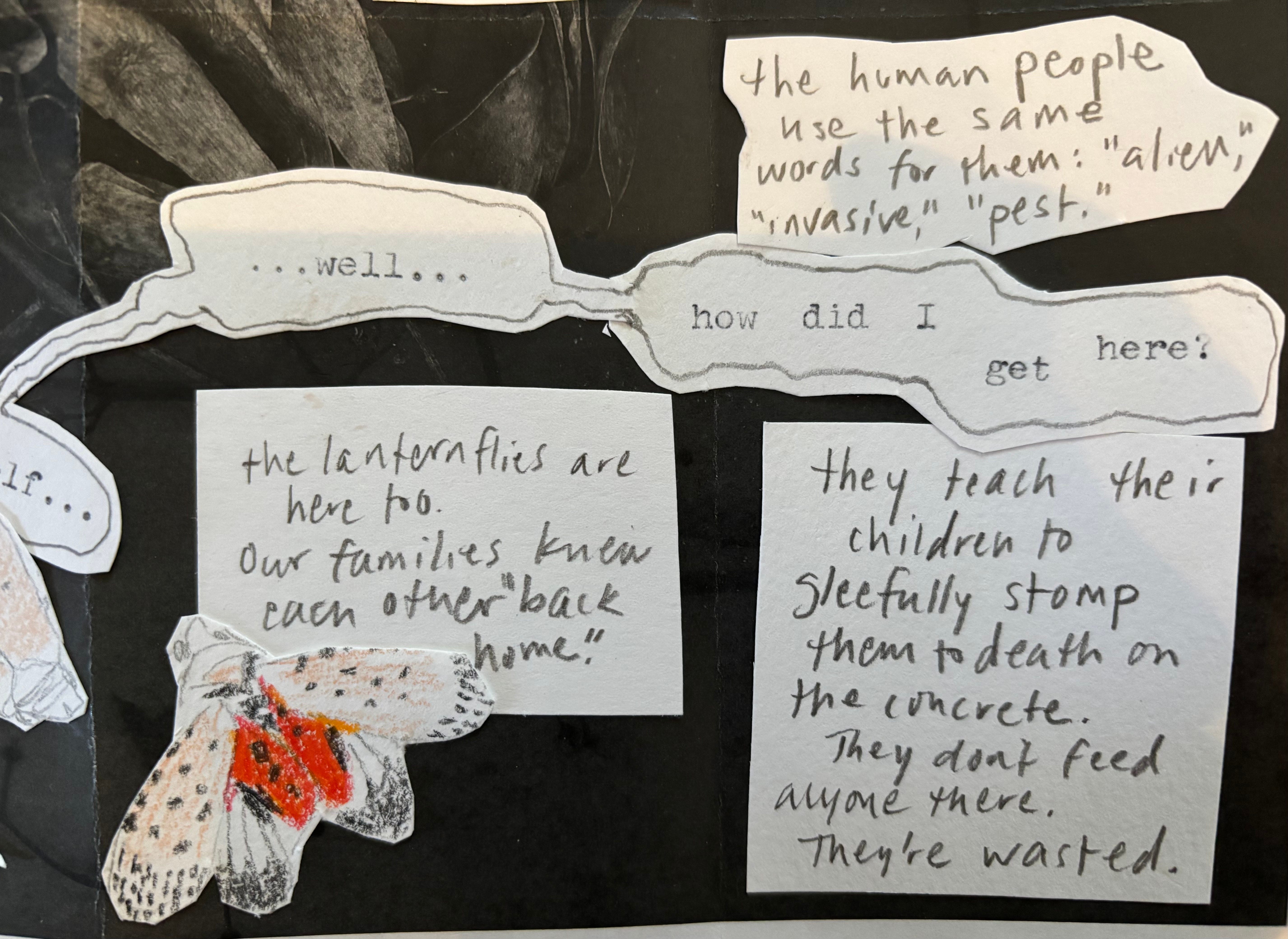
“Never interfere with the sacred purpose of another being,” writes Kimmerer4. To do so, you would need to know what it is, and remember, we will never fully understand that purpose. The left hemisphere likes to fix things, to feel sure of them. It likes to capture a butterfly and kill it in a jar of ether and pin it on a board with a little paper strip that says what it is. Of course, now dead, and pinned, and fixed, it’s not what it was at all, when it was still linked into the rete mirabile of the living world. But it can get even worse, than just fixing things. I found an old paperback called “The Art of Loving” from the 1950s in a pile of free books. In it, the author writes, “The child takes something apart, breaks it up in order to know it; or it takes an animal apart; cruelly tears off the wings of a butterfly in order to know it, to force its secret.” You won’t find it, the secret, once you have it all broken down into parts. Such a reduction can’t give you more than the mechanistic explanation, and the life that was emergent, inherent, in the wholeness and suchness of the insect fled from you the moment you tried to see it in that way. Everything is interconnected, and there is no such thing as a free-standing individual. There is no true isolation of variables. Everyone knows this, even those who pretend not to know. Sunaura Taylor5 writes, “settler colonial America has always known that environmental crises are health crises, which is why so many colonial projects have harmed land in order to harm Native communities.” Salt the Earth, poison the well, march the people away to a reservation, to a completely different context, then claim you didn’t harm a hair on their heads. You never even touched them, as if you don’t know we are each interpenetrated by the air, the water, and the soil from which we were made.
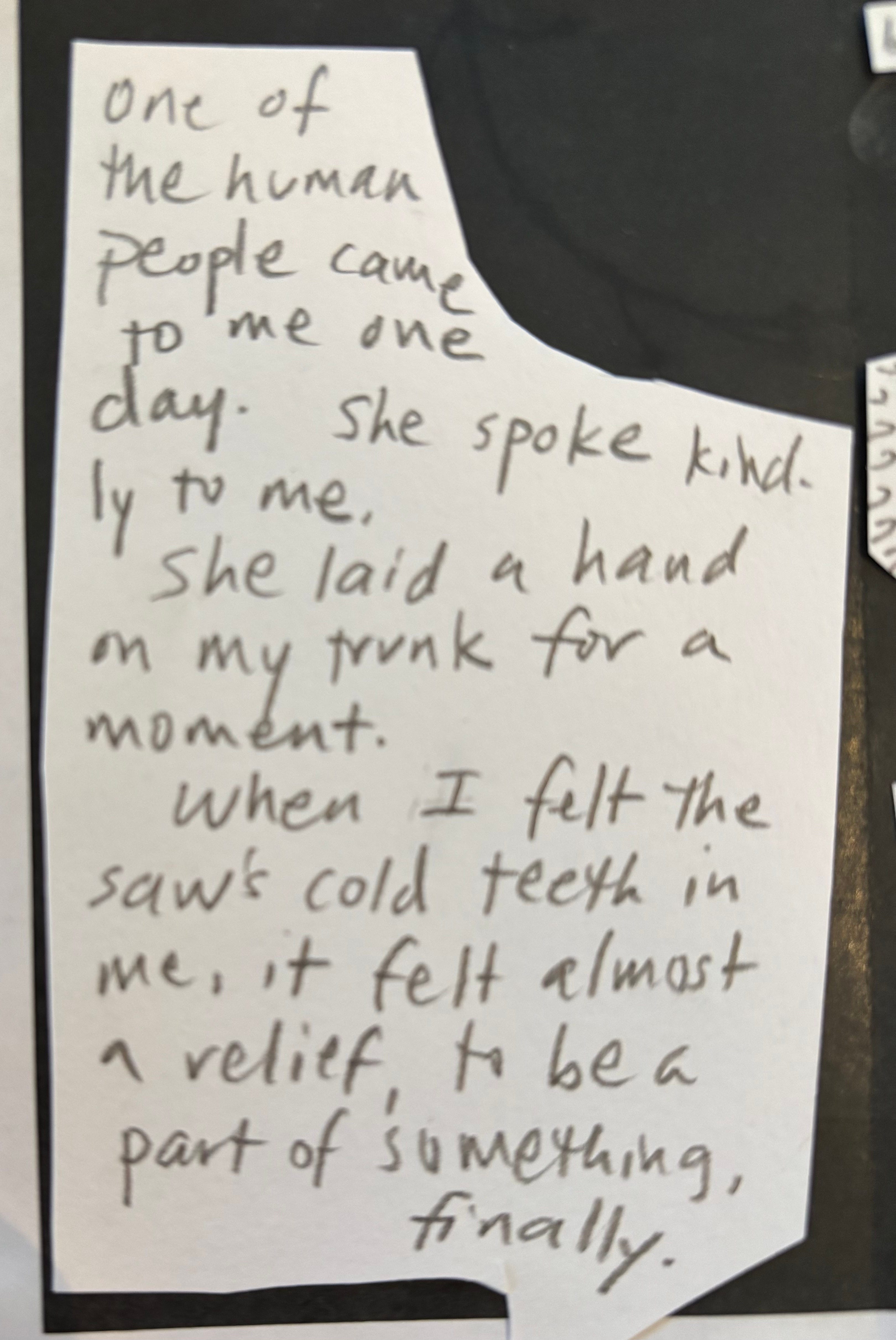
I know I sometimes sound cartoonishly like the radical progressive professor of conservative nightmares. The bogeyman of their steaming, stomping rants. That’s fine. I stand by my biases. That capitalism is not a positive good, nor a neutral baseline. That you must always follow the money. That you must always hold in your mind that every person is a sacred being, along with the fact that some of them have forgotten that. They have lost contact with something inside themselves, and between themselves and everything else. Remember when we were learning about the hyporheic zone? The interconnected surface stream, and the contiguous groundwater beside and beneath it?6 It’s far more interconnected than the understanding we usually have of rivers--our image of them being something more like a water slide than a huge living thing whose body is only partly visible to us. When an aquifer has been depleted so far that it becomes discontiguous with the surface water in the river above it, it’s called “losing reach.” When certain injuries or surgeries happen to a person such that the hemispheres no longer communicate across the midline, it’s called “split-brain” and it produces some bizarre results. Some changes - to aquifers, to brains - are irrevocable. What do you do when a living thing will need extra, sometimes even extraordinary, care for the rest of its life?
Leanne Betasamosake Simpson, a Michi Saagiig Nishnaabeg scholar, wrote, “You do not abandon your mother when she is sick. You do not abandon the land because it is contaminated or encroached upon.” This way of thinking is different from how most of us were taught. We were taught that the land is a machine that you discard when it doesn’t work anymore. We were not taught that the Earth is alive, and the particular place on Earth where you live your life is a family member, who may become sick, or disabled, and will need your help. When the water or the soil is poisoned, they say, “why don’t you just move away?” and they are baffled if you say, “because this is my home.” It’s a wasteland, they say, and you certainly don’t sit vigil beside a broken machine or bring tea and company to a pile of garbage.
I don’t know what tidy sum-up to leave you with. I feel an inclination to put together a list of aphorisms, or a version of Sister Corita’s rules. I think it’s mostly this: whenever you get the feeling that something is embarrassing, do it. Embarrassment is a tool of the oppressor. Embarrassment points you toward what they know is powerful and threatening, and they make you think it’s actually weak and stupid. Asking questions, admitting uncertainty, expressing deep love, being enthusiastic, longing for connection, feeling pleasure in your body, having a body at all, in its unpredictability and unruliness…think about it. Every time you have ever felt embarrassment, you’ve been onto something deep, and you’re supposed to always pretend nothing ever touches you deeply. But if you do that, they will win.
Love what you love. Tell everyone about it. Apologize when you hurt something, including plants.Trust your gut, your intuition, and recognize that science is a tool to help you explore and refine that intuition. Don’t let the bastards get you down. Come find me anytime. Thank you for everything. I love you.
1 Pollution is Colonialism, Max Liboiron
2 The Master and His Emissary, Iain McGilchrist
4 In the Footsteps of Nanabozho (from Braiding Sweetgrass), Robin Wall Kimmerer
5 Disabled Ecologies, Sunaura Taylor